Minimalist packaging is about purpose, not emptiness
Minimalist packaging is often described as a visual trend: neutral colours, clean typography and plenty of empty space. Yet the strongest minimalist packs go further. They remove elements that do not protect the product, communicate useful information or improve the customer experience.
That approach appeals to businesses because it can create a recognisable look while simplifying purchasing and packing. A kraft paper wrap, a carefully chosen tissue colour and one clear label may do more than several competing prints, ribbons and inserts. Minimal does not have to mean plain, however. It means every component has a reason to be there.
What does minimalist packaging look like?
There is no single minimalist format. The principle can work across retail, e-commerce, gifts, flowers and corporate orders. Typical features include:
- A limited colour palette, often led by one neutral and one accent colour.
- Simple typography and a clear information hierarchy.
- Fewer decorative layers and less duplicated messaging.
- Packaging sized appropriately for the product.
- Materials selected for their function as well as their appearance.
- Consistent details that customers can recognise across several product lines.
The result should feel intentional. If removing a component makes the product harder to protect, identify, transport or use, it was probably serving a necessary function.
Why businesses are adopting a simpler approach
A clearer brand impression
Busy packaging can make it difficult to see which message matters. Minimalist design gives the brand name, product information and key instructions more room. A restrained system can also make different product lines feel connected, even when their sizes or formats vary.
More efficient purchasing and packing
Reducing the number of colours, inserts and finishing components can simplify stock management. Staff have fewer decisions to make, and a shared set of materials can cover more orders. These benefits depend on good planning: removing a useful component or choosing the wrong pack size can create damage, rework and waste.
A better fit for e-commerce
E-commerce businesses must balance presentation with parcel dimensions, protection and packing speed. A clean inner presentation can create a strong unboxing moment without turning the shipping carton into an elaborate gift box. Review Kendon’s e-commerce packaging options when separating the protective outer pack from the branded customer experience inside.
Pressure to remove unnecessary packaging
Businesses and customers increasingly question layers that appear unnecessary. UK extended producer responsibility for packaging also creates incentives to reduce unnecessary packaging, reuse where practical and design for effective recycling. Minimalist design can support those aims, but appearance alone does not determine environmental performance.
Why kraft paper suits minimalist packaging
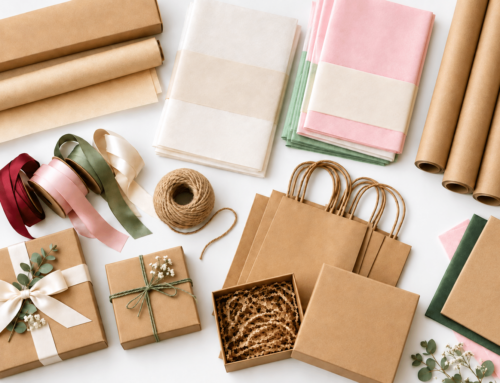
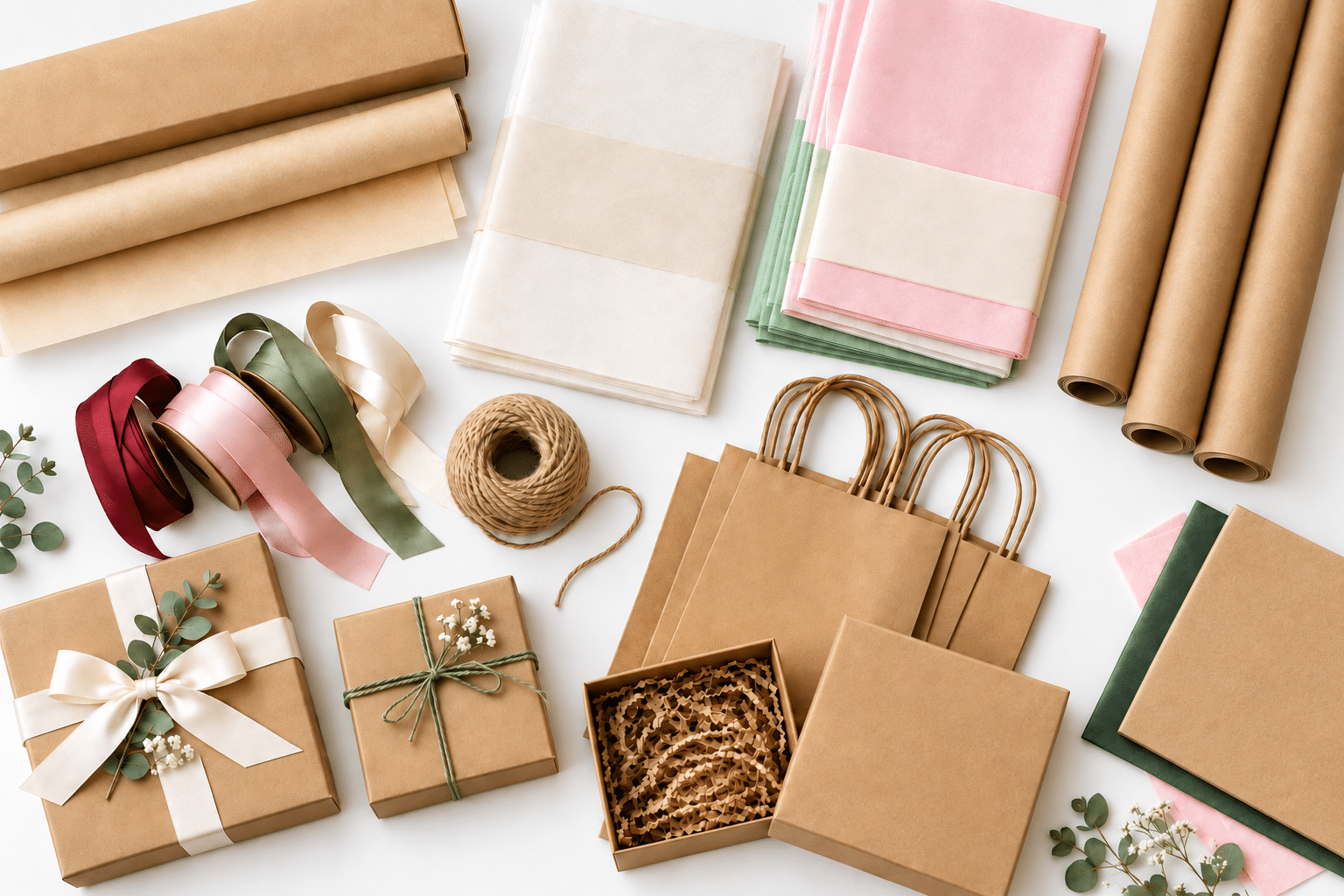
Kraft paper has a natural texture and neutral colour that can carry a simple visual identity without heavy printing. It works with black, white, green, burgundy, navy and many other accent colours. Rolls also allow teams to cut paper for different product sizes, which can be useful when a business needs a flexible wrapping material.
Kendon’s kraft paper range includes pure and recycled rolls, sheets and other kraft formats across different dimensions and paper weights. The best choice depends on the application. Compare strength, finish, fold performance and handling requirements rather than selecting a grade by colour alone.
Use coloured tissue as the accent
A minimalist pack does not need to be colourless. Tissue paper can introduce one controlled colour at the moment the customer opens a box or bag. This keeps the exterior simple while giving the interior more personality.
Choose a tissue shade that reinforces the brand or creates a deliberate contrast with kraft paper. Dark green or burgundy can add seasonal warmth. Cream or grey feels restrained. Dark blue or black can create a sharper, more contemporary effect. Browse Kendon’s coloured tissue paper to compare available formats and colours.
Seven principles for effective minimalist packaging
- Protect the product first. Keep every component needed for handling, storage and transit performance.
- Use fewer materials deliberately. Remove duplication, not essential protection or legally required information.
- Limit the palette. One neutral and one accent colour are often enough to create a coherent system.
- Create a clear information hierarchy. Make the brand, product identity and essential instructions easy to find.
- Right-size the format. Avoid an oversized pack simply to create visual drama or accommodate one unusual product.
- Design for repeatability. Staff should be able to reproduce the same result quickly and consistently.
- Test the complete pack. Review appearance, packing time, damage risk, material use and customer disposal instructions together.
Minimalist Christmas packaging without losing the occasion
Christmas packaging often accumulates extra layers: patterned paper, ribbons, bows, tags, stickers and inserts. A minimalist seasonal design chooses one or two of those signals and uses them consistently.
- Wrap with brown kraft paper and add dark-green tissue inside the box.
- Use cream tissue with a burgundy label for a softer premium look.
- Keep the usual brand colours and introduce Christmas through one seasonal message card.
- Use a single branded sticker to close tissue rather than adding several decorative elements.
- Choose one ribbon, tape or twine treatment for premium gifts only, instead of applying it to every order.
This approach can help small teams deliver a festive experience without building a completely separate packaging system for a short trading period. For more seasonal applications, read Gift Packaging Supplies for Christmas: Ideas for Retailers & Small Businesses.
How to stop minimalist packaging looking cheap
Minimalist packaging exposes the quality of every decision. Crooked labels, weak boxes and inconsistent folds become more obvious when there are fewer decorative distractions. Concentrate on execution rather than adding more components.
- Choose paper that folds cleanly and suits the weight and shape of the product.
- Use repeatable label positions and consistent spacing.
- Keep printed information sharp, legible and free from unnecessary wording.
- Select a box or outer pack that fits the product and survives the intended journey.
- Create a small number of approved wrapping examples for staff to follow.
If standard components cannot create the required result, Kendon’s bespoke packaging solutions can support a more tailored specification.
Minimal does not automatically mean sustainable
A pack can look natural and still contain coatings, adhesives or mixed materials that affect disposal. Equally, removing material can be counterproductive if the product becomes more likely to break or require replacement. Assess the complete system rather than relying on brown paper, muted colours or recycling symbols as proof of performance.
Ask for accurate material specifications and review the disposal route available to the intended customer. Businesses that fall within packaging reporting or fee requirements should also follow the current GOV.UK guidance on extended producer responsibility. Kendon’s eco-friendly packaging range can provide a starting point for product discussions, but each option should still be assessed against the application.
Test a minimalist packaging system before rollout
- List the job performed by every current packaging component.
- Identify duplicated decoration, oversized formats and messages customers do not need.
- Create two or three simpler prototypes rather than moving straight to a full order.
- Pack real products and test them through the expected storage, handling and delivery conditions.
- Record material use, packing time, damage and staff feedback.
- Confirm the final specification, train the team and monitor results after launch.
Frequently asked questions
Is minimalist packaging suitable for every brand?
The principles are widely useful, but the visual result should still fit the brand and customer. A playful business may use brighter colour and bolder typography while keeping the number of components low. Minimalist packaging is a system, not a fixed beige aesthetic.
Does minimalist packaging always cost less?
Not necessarily. Fewer components can simplify purchasing and assembly, but specialist papers, short bespoke runs or premium printing may increase unit costs. Compare the total packed cost, including labour, storage, damage and rework.
Can kraft paper be used for e-commerce orders?
Kraft paper can provide wrapping, presentation or void-management functions in some packs, but it should not automatically replace a suitable shipping container or protective material. Test the complete pack against the product and delivery journey.
Simplify your packaging with the right specification.
Explore Kendon’s kraft papers, coloured tissue and wider packaging range, or contact Kendon Packaging for help comparing formats, sizes and quantities.